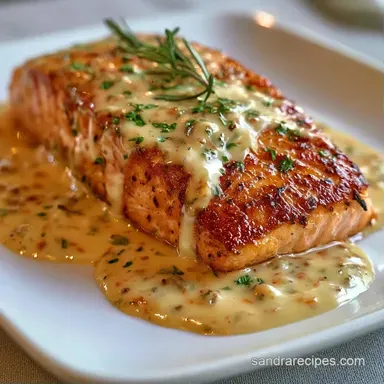
Restaurant-Style Salmon with Garlic Cream Sauce
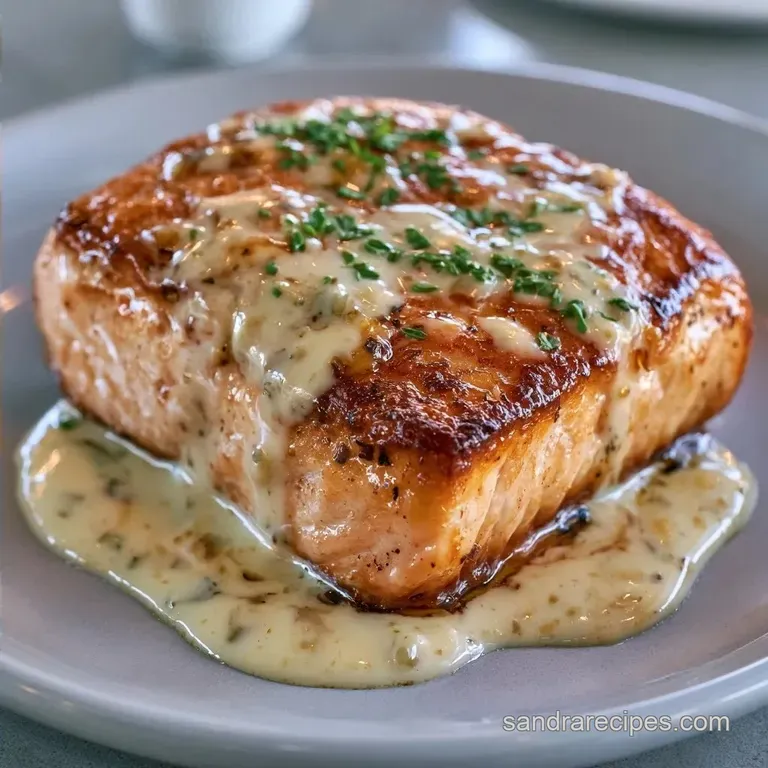
- Time: 10 min active + 15 min cook
- Flavor/Texture Hook: Crispy mahogany skin with a silky garlic finish
- Perfect for: A stress free weeknight dinner that feels fancy
The sound of salmon hitting a hot pan is the best part of my evening. That loud, aggressive sizzle tells me the oil is ready and the skin is about to get seriously crispy. For a long time, I thought cream sauces were only for white tablecloth restaurants because they seemed too finicky for a Tuesday night.
I assumed you needed a French degree to keep the sauce from separating or breaking.
Honestly, that's just not true. You don't need a mountain of equipment or a complicated technique to get this right. Once you realize the pan you used to sear the fish is actually a flavor goldmine, everything changes.
This Salmon with Garlic Cream Sauce is all about using one skillet to do the heavy lifting. We're going to get that skin crackling, then use the leftover brown bits to build a sauce that's hearty and comforting. It's reliable, fast, and doesn't require you to hover over the stove for an hour.
Salmon with Garlic Cream Sauce
The real goal here is balance. You have the rich, fatty salmon and the heavy cream, but then you hit it with lemon juice and zest to cut through that weight. If you skip the lemon, it's too heavy. If you overcook the fish, it's dry. But when you hit that sweet spot, it's the most comforting meal in my rotation.
I've found that using avocado oil is a lifesaver because it doesn't smoke as quickly as butter. I used to use butter for the whole process, but it would burn before the skin actually crisped up. Now, I use oil for the sear and save the butter for the sauce.
It's a small change that makes a huge difference in the final result.
Why the Method Works
- Bone Dry Skin: Patting the fish with paper towels removes surface moisture, which lets the skin fry instead of steam.
- The Pan Fond: Those brown bits stuck to the pan after searing are pure flavor, and the cream lifts them right back into the sauce.
- Cold Butter Addition: Adding butter to the pan after the heat is lowered creates a rich base for the garlic without burning it.
| Method | Time | Texture | Best For |
|---|---|---|---|
| Stovetop | 25 mins | Very Crispy Skin | Fast weeknights |
| Oven | 35 mins | Uniformly Tender | Large groups |
What Each Ingredient Does
| Ingredient | What It Does | Best Swap |
|---|---|---|
| Heavy Cream | Thickens and carries garlic flavor | Half and half (thinner sauce) |
| Parmesan | Adds saltiness and body | Pecorino Romano (sharper taste) |
| Lemon Juice | Cuts through the fat | White wine (more acidic/fruity) |
| Avocado Oil | High smoke point for searing | Grapeseed oil (similar heat profile) |
The Ingredient List
- 4 (6 oz) salmon fillets, skin on Why this? Skin on protects the flesh and adds texture
- 1 tbsp avocado oil Why this? Won't burn at high searing temps
- 1 tsp kosher salt
- 1/2 tsp cracked black pepper
- 1/2 tsp paprika Why this? Adds a hint of smokiness and color
- 3 tbsp unsalted butter
- 4 cloves garlic, minced
- 1 cup heavy cream Why this? Provides the necessary fat for a stable sauce
- 1/2 cup grated Parmesan cheese
- 1 tbsp fresh lemon juice
- 1 tsp lemon zest
- 2 tbsp fresh parsley, chopped
- 1/4 tsp salt
Minimal Tools Needed
You only need a few things to pull this off. A large stainless steel or cast iron skillet is the way to go because they hold heat better than non stick. If you use non stick, you might not get as much "fond" (those brown bits), but it still works.
I also suggest a whisk or a fork to get the Parmesan blended in quickly. A fish spatula is great for flipping, but a regular turner works just fine as long as you're gentle.
Cooking Steps
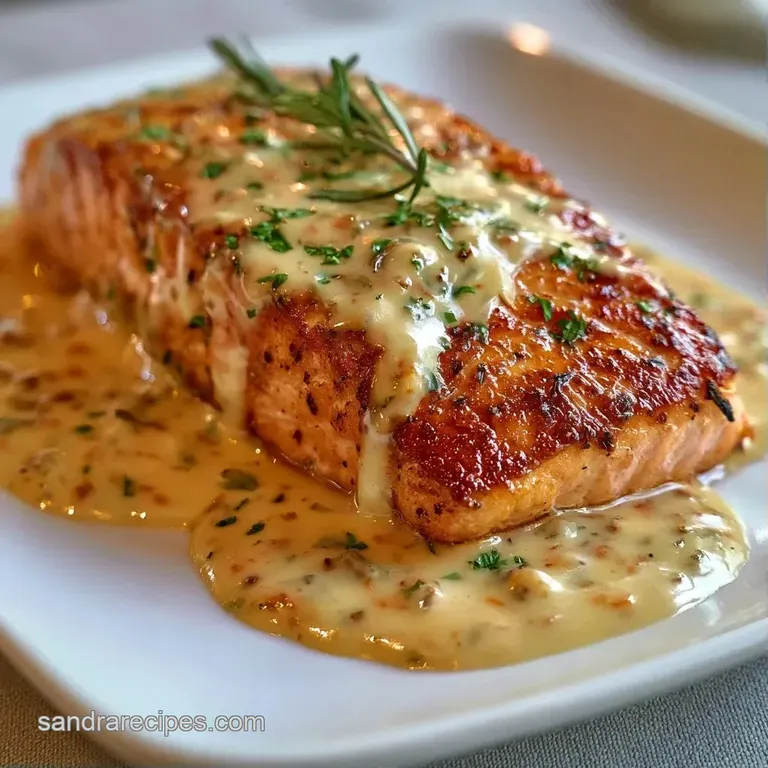
Phase 1: Achieving the Golden Sear
- Pat the salmon fillets bone dry with paper towels. Season generously with salt, pepper, and paprika. Note: Moisture is the enemy of a crisp crust.
- Heat oil in the skillet over medium high heat until it shimmers.
- Place salmon skin side down. Press gently with a spatula for 10 seconds to ensure contact. Cook undisturbed for 4–5 minutes until the skin is mahogany colored and crisp.
- Flip and cook for another 3–4 minutes for medium rare to medium. Remove fillets from the pan and set aside on a plate.
Phase 2: Building the Flavor Base
- Lower heat to medium. Add butter to the same pan, scraping up the brown bits from the salmon.
- Stir in the minced garlic and sauté for 30 60 seconds until fragrant but not browned. Note: Burnt garlic tastes bitter and will ruin the cream.
Phase 3: Emulsifying the Cream Sauce
- Pour in the heavy cream. Bring to a gentle simmer for 3–5 minutes until it begins to thicken slightly.
- Whisk in Parmesan cheese until melted and smooth. Stir in lemon juice and lemon zest.
- Return the salmon fillets to the pan, spooning the creamy garlic butter sauce over the top. Garnish with fresh parsley and serve immediately.
Chef's Tip: If the sauce feels too thick, whisk in a tablespoon of water or white wine. If it's too thin, let it simmer for an extra minute before adding the cheese.
Fixing Common Issues
When making Salmon with Garlic Cream Sauce, a couple of things usually go sideways. Usually, it's either the fish sticking or the sauce looking "split" (where the oil separates from the cream).
Why Your Salmon Sticks
This usually happens if you flip the fish too early. The salmon will naturally release itself from the pan once the proteins have seared enough. If you tug and it resists, give it another 30 seconds.
Why Your Sauce Separates
High heat is the main culprit here. According to Serious Eats, overheating cream can cause the fats to separate from the solids. Keep the heat at a gentle simmer, never a rolling boil.
| Problem | Root Cause | Solution |
|---|---|---|
| Sauce is too thin | Not simmered long enough | Simmer 2 more mins before cheese |
| Garlic is bitter | Garlic browned too much | Start sauce with fresh butter |
| Skin is soggy | Pan wasn't hot enough | Wait for oil to shimmer before adding fish |
Scaling Your Portion
If you're making this Salmon with Garlic Cream Sauce for just one or two people, you can halve the recipe easily. Use a smaller skillet so the cream doesn't spread too thin and evaporate too quickly. Reduce the simmering time by about 20%.
For a larger crowd (8 fillets), I recommend working in batches. Sear the fish in two turns so you don't crowd the pan. If you crowd the pan, the temperature drops, and you'll end up steaming the fish instead of searing it.
For the sauce, you can double the liquids, but only increase the salt and paprika by 1.5x to avoid over seasoning.
If you prefer a baked salmon method, you can sear the skin first and finish it in the oven, then make the sauce in the pan while the fish rests.
Truth About Searing
There is a common belief that searing meat or fish "locks in the juices." This isn't actually how it works. Moisture loss happens regardless of how you start the cook. Searing is purely about flavor and texture.
The brown crust we're creating is a result of sugars and proteins reacting to heat, which adds a depth you just can't get from poaching or steaming.
Another myth is that you need to "warm up" the salmon to room temperature for 30 minutes before cooking. While some people swear by it, it's not necessary for fillets of this size. Just make sure the skin is dry.
Storage and Waste
Store any leftovers in an airtight container in the fridge for up to 2 days. The sauce will thicken significantly as it cools. When you're ready to eat, reheat it gently on the stove with a splash of milk or water to bring the sauce back to a pourable consistency.
I don't recommend freezing the salmon once it's in the cream sauce. The texture of the cream can become grainy after thawing.
For zero waste, don't toss the lemon scraps. You can freeze the leftover lemon rinds to infuse into sugar or salt. If you have a bit of the garlic cream sauce left over but no fish, it makes a great base for a pasta dish. Just toss in some boiled fettuccine and a handful of spinach.
Serving and Pairing
This dish is rich, so you want sides that offer some brightness or crunch. I love serving it with steamed asparagus or a crisp arugula salad with a light vinaigrette. If you want something heartier, a side of wild rice or mashed potatoes works well to soak up the extra sauce.
If you're looking for a different take on this flavor profile, try my lemon butter salmon for a lighter, punchier version.
Decision Shortcut:
- If you want extra crisp skin, use avocado oil and press firmly.
- If you want a thicker sauce, simmer the cream for 2 more minutes.
- If you're in a rush, use pre minced garlic.
Whether you're cooking for a date or just treating yourself, this Salmon with Garlic Cream Sauce delivers a lot of flavor without a lot of stress. Just remember: dry skin, gentle simmer, and plenty of lemon. Trust me, your kitchen will smell like a bistro in about 20 minutes.
High in Sodium
1080 mg 1,080 mg of sodium per serving (47% 47% of daily value)
The American Heart Association recommends a daily limit of no more than 2,300 mg of sodium to maintain heart health and lower blood pressure.
Tips to Reduce Sodium
-
Cut Added Salt-25%
Reduce the kosher salt and extra salt by half or replace them with a salt free seasoning blend to significantly lower sodium levels.
-
Limit Parmesan-15%
Reduce the amount of grated Parmesan cheese or swap a portion of it for nutritional yeast to maintain a savory flavor with less salt.
-
Increase Citrus-10%
Add an extra squeeze of fresh lemon juice; the acidity mimics the taste of salt and brightens the salmon and cream sauce.
-
Boost Fresh Herbs
Increase the amount of fresh parsley and cracked black pepper to add aromatic depth and complexity without adding any sodium.
Recipe FAQs
What creamy sauce goes with salmon?
A garlic cream sauce with Parmesan and lemon. This combination cuts through the richness of the fish with bright acidity and savory depth.
How do I make garlic cream sauce?
Sauté minced garlic in butter, then simmer heavy cream for 3 5 minutes. Whisk in Parmesan cheese, lemon juice, and lemon zest until smooth.
How to cook salmon for diabetics?
Reduce the butter and heavy cream quantities. For a lighter, health conscious alternative, try a low calorie salmon dinner.
Is it true that salmon must be cooked until fully opaque to be safe?
No, this is a common misconception. Cooking fillets to medium rare or medium keeps the fish moist and tender while remaining safe to eat.
How to get the salmon skin perfectly crispy?
Pat the fillets bone dry with paper towels and press them with a spatula for 10 seconds in shimmering oil. Cook undisturbed for 4 5 minutes.
What is the most delicious but simple recipe for salmon?
Pan-searing with a garlic cream pan-sauce. It delivers restaurant quality texture and flavor in just 25 minutes using a single skillet.
Can I freeze salmon after it has been coated in the cream sauce?
No, avoid freezing it. The cream sauce often becomes grainy and separates after thawing, ruining the smooth consistency.
Salmon With Garlic Cream Sauce