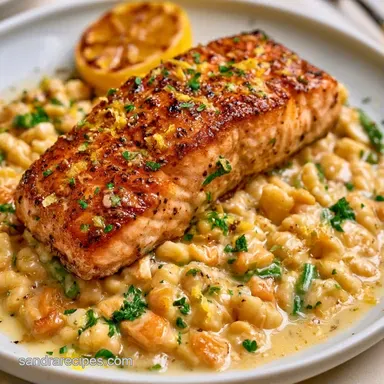
One-Pan Lemon Salmon Pastina
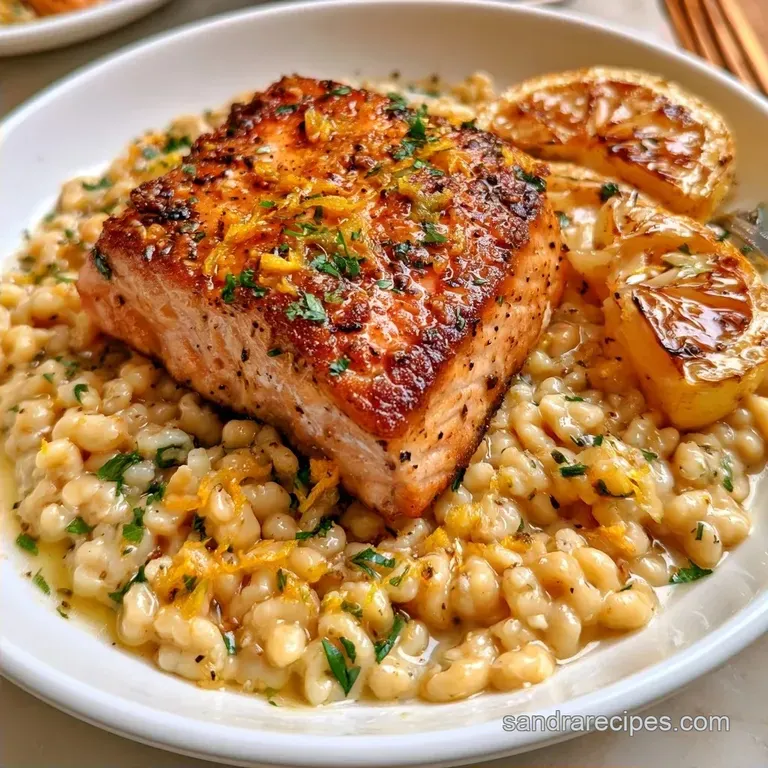
- Time: 15 min active + 15 min cook
- Taste & Texture: Zesty, buttery, and creamy with tender flakes of fish
- Ideal for: A relaxed weeknight meal
The scent of browning butter and searing salmon always gives my kitchen a cozy bistro vibe. That initial sizzle as the fish hits the pan is the signal that a great dinner is on the way, helping me transition from a busy day to a calm evening.
I used to imagine that creamy seafood dishes meant scrubbing several pots and spending an hour reducing a sauce on the stove. Then I discovered the magic of pastina. These small pasta grains do the hard work, thickening the base to perfectly capture the lemon and cream.
I love this Salmon Pastina because it delivers an upscale feel with almost no effort. It is a dependable, filling dish that doesn't require any fancy equipment. With just one skillet and about 30 minutes, you can have a plate of pure comfort ready to eat.
Why This Recipe Works
- Pastina Starch: These tiny noodles release a lot of starch as they simmer. This naturally thickens the sauce, which is why my Lemon Parmesan Pastina also has that same rich cling.
- One Pan Method: Searing the fish first leaves behind flavorful fats. When we toast the pasta in those same juices, the flavor builds in layers.
- Citrus Balance: The lemon juice cuts through the heavy cream and butter. This stops the dish from feeling too heavy and keeps it tasting fresh.
| Choice | Prep Time | Texture | Best For |
|---|---|---|---|
| Fresh Salmon | 15 mins | Flaky & Firm | A hearty main dinner |
| Smoked Salmon | 5 mins | Soft & Salty | A quicker, brunch style meal |
| Frozen Fillets | 20 mins | Softer | Budget friendly weeknights |
The Essential Ingredient List
For the best results, opt for a high-quality chicken stock, as it offers a complexity that water cannot provide. When buying store-bought, choose the low-sodium option to keep the seasoning under your control.
Ingredient Deep Dive
| Ingredient | What It Does | Best Swap |
|---|---|---|
| Salmon Fillets | Primary protein and healthy fats | Rainbow trout |
| Pastina | Thickens the sauce with starch | Orzo or Acini di Pepe |
| Heavy Cream | Creates body and richness | Full fat coconut milk |
| Lemon | Adds essential brightness | White wine or capers |
For the Salmon
- 1 lb salmon fillets Why this? Ideal quantity for 4 people
- 2 tbsp olive oil Why this? Suitable for high temp searing
- 1/2 tsp kosher salt
- 1/4 tsp black pepper
For the Creamy Lemon Pastina
- 1 cup pastina Why this? Small grains increase sauce contact
- 2 tbsp unsalted butter Why this? Adds depth when toasting
- 3 cloves garlic, minced Why this? Core aromatic element
- 2 cups chicken stock, warm Why this? Maintains pan heat during cooking
- 1/2 cup heavy cream Why this? Gives the sauce a silky finish
- 1/2 cup Parmesan cheese, finely grated Why this? Provides saltiness and umami
- 1 medium lemon, zested and juiced Why this? Cuts through richness with acidity
- 2 cups baby spinach Why this? Incorporates greens and color
- 2 tbsp fresh parsley, chopped Why this? Finishes the dish with a fresh herb taste
Quick Recipe Specifications
This dish is designed for efficiency. I've found that sticking to the 30 minute total time prevents the salmon from getting rubbery and the pastina from turning into mush.
- Prep time: 15 minutes
- Cook time: 15 minutes
- Total time: 30 minutes
- Yield: 4 servings
- Protein: 35g
- Carbs: 43g
- Fat: 35g
Basic Kitchen Gear Needed
You don't need a fancy arsenal for this. I use a simple 12 inch stainless steel or cast iron skillet. Non stick works too, but you won't get as good of a crust on the salmon.
- Large skillet (12 inch recommended)
- Paper towels (for drying the fish)
- Tongs or a fish spatula
- Fine grater or zester
- Measuring cups and spoons
Step by step Cooking
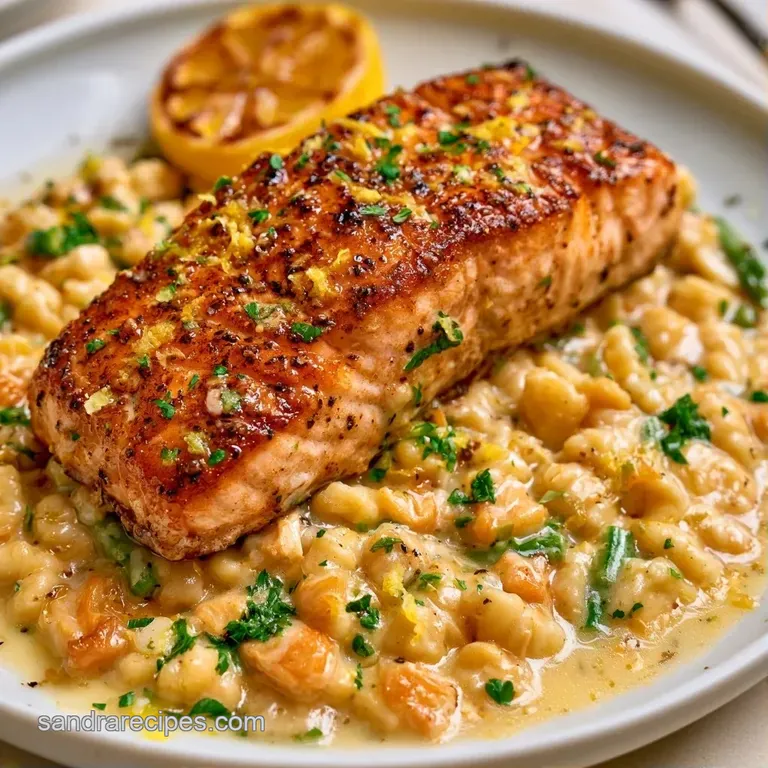
Let's get started. The aim is to keep the heat consistent so the salmon gets a great sear and the pasta simmers without clumping.
Phase 1: The Golden Sear
- Use paper towels to get the salmon fillets thoroughly dry. Season both sides with salt and pepper. Note: Dry fish sears better and avoids steaming in the pan.
- Heat olive oil in a large skillet over medium high heat.
- Cook the salmon for 4-5 minutes per side until a golden brown crust develops and the fish flakes easily.
- Move the salmon to a plate and let it rest.
Phase 2: Building the Flavor Base
- Turn the heat down to medium. Melt the butter in the same skillet.
- Sauté the minced garlic for 1 minute until it becomes aromatic.
- Stir in the dry pastina, tossing it in the garlic butter for 2 minutes until the pasta is lightly toasted.
Phase 3: The Pastina Simmer
- Pour in the warm stock.
- Bring the pan to a gentle simmer, stirring often. Cook for 7-9 minutes until the liquid is mostly absorbed and the pasta is tender.
Phase 4: The Velvety Finish
- Mix in the heavy cream, Parmesan cheese, lemon juice, and lemon zest.
- Add the baby spinach and stir until just wilted.
- Gently fold in the flaked salmon and chopped parsley.
Chef's Note: If the sauce seems too thick before you re-add the salmon, stir in another tablespoon of stock. The pastina continues to absorb liquid even after the heat is turned off.
Fixing Common Plate Problems
Combining salmon and cream can be a bit challenging if you're new to it. I've certainly had my share of errors, but these solutions typically resolve things.
Fixing a Thick Sauce
Pastina acts like a sponge. If the dish seems more like a porridge than a creamy pasta, don't worry. Simply stir in 2-4 tbsp of warm water or stock. Add this gradually, one tablespoon at a time, until you reach a pourable consistency.
Handling Overcooked Salmon
Rubbery fish usually means it stayed in the pan for too long. To avoid this, test the thickest part of the fillet with a fork; it should be opaque and flake apart easily. If you've overcooked the salmon, fold it into the sauce at the very last moment so the cream can provide some extra moisture.
Preventing Sauce Separation
This typically happens if the heat is too high when adding the lemon and cream. If you notice the sauce splitting, lower the heat immediately. Whisk in a small knob of cold butter quickly, as the fat helps bind the sauce back together.
Keeping Leftovers Fresh
Because this meal contains fish and cream, proper storage is important. Try not to keep it for too long, as the pasta tends to soak up the sauce while in the refrigerator.
Fridge Storage Keep leftovers in an airtight container for 2-3 days. When reheating, you'll likely find the sauce has been absorbed; simply stir in a splash of stock or milk to bring back that creamy consistency.
Freezing Guidelines I wouldn't recommend freezing this Lemon Salmon Pastina. The cream often separates upon thawing, and the fish can develop a grainy texture. It is best enjoyed fresh or as a leftover lunch the next day.
Sustainable Kitchen Tips Instead of discarding the salmon skin, pat it dry and fry it in a pan until it becomes a crispy cracker. Additionally, you can repurpose the leftover lemon peels by zesting them into a fresh salad or infusing them into sugar for baking.
Making the Plate Pretty
You don't need to be a pro to make this look great. Because the pastina is so small, it looks best in a wide, shallow bowl rather than a deep plate.
Start by scooping a generous portion of the creamy pasta into the center. Place a large flake of salmon right on top to show off that golden crust. Sprinkle a bit of extra fresh parsley and a pinch of lemon zest over the top for a pop of color.
A final crack of black pepper adds a nice contrast to the brightness of the lemon.
If you want to make it feel more like a restaurant meal, serve it with a side of steamed asparagus or a crisp arugula salad. The bitterness of the greens balances the richness of the cream.
Tweaking the Final Flavor
After you've mastered the basic recipe, feel free to experiment with the ingredients. You can easily shift the profile of the dish based on what you have on hand.
Using Smoked Salmon
If fresh fillets aren't available, smoked salmon is a great substitute. You can skip the searing process entirely. Simply cook the pastina as directed, then stir in ribbons of smoked salmon at the very end. This version provides a bold, salty flavor and makes for a faster meal.
Making It dairy free
To create a dairy-free version, replace the butter with olive oil and the heavy cream with full fat coconut milk. In place of Parmesan, use nutritional yeast or a vegan cheese alternative. The coconut milk actually complements the lemon and fish quite well.
Trying Other Greens
Spinach is the traditional choice, but kale or peas are excellent alternatives. If you choose kale, stir it in a few minutes before the spinach to give it more time to soften. For a different protein twist, you can use my Homemade Baked Salmon and flake it into the pasta.
Quick Decision Guide: Extra tang? → stir in 1 tsp additional lemon zest More heat? → add 1/4 tsp red pepper flakes to the garlic Heartier meal? → mix in 1/2 cup frozen peas during the simmer
This Lemon Salmon Pastina is designed for simplicity and consistency. It transforms a few pantry staples into an elegant dinner without the stress of a complicated process. Just remember to pat your salmon dry and keep your stock warm for the best results.
Recipe FAQs
How to make the creamy lemon sauce?
Stir the heavy cream, Parmesan, lemon juice, and zest into the simmered pastina.
Tip: Mix in the lemon juice last to preserve its brightness.
Does creamy pasta pair well with salmon?
It creates a rich contrast that complements the fattiness of the fish.
Tip: Balance the richness with a generous amount of fresh parsley.
Is it true that lemon should be added to salmon before cooking?
That's a myth. Adding acid before searing prevents a golden brown crust from forming.
Tip: Use the lemon juice in the sauce for the best result.
Which pasta works best with grated parmesan?
Small shapes like pastina are ideal because they maximize the surface area for the cheese to cling to.
Tip: If you enjoy this creamy texture, you might like our creamy pastina.
What's the method for a garlic Parmesan base?
Sauté minced garlic in butter, toast the pastina, then simmer in chicken stock before adding cream and cheese.
Tip: Keep the stock warm to avoid dropping the pan temperature.
Can Gouda replace Parmesan in this recipe?
Surprisingly, no. A different cheese would alter the melting point and flavor profile of the lemon sauce.
Tip: Stick to finely grated Parmesan for a smooth, emulsified finish.
Why does the salmon need to be dried?
Removing surface moisture ensures the fish sears instead of steaming in the pan.
Tip: Use a clean paper towel to press firmly on both sides of the fillets.
Should the pastina be boiled separately before adding to the pan?
Not true. Toasting and simmering the dry pasta directly in the stock creates a starchier, creamier sauce.
Tip: Stir frequently to prevent the grains from sticking to the bottom.
Lemon Salmon Pastina