Crispy Honey Garlic Salmon

- Total35 Mins
- Servings4 fillets
- Calories450 kcal
- Time: 5 min active + 10 min cooking + 20 min resting
- Make it when: you need a vibrant, healthy dinner that feels fancy but takes almost no effort
- Pairs with: steamed bok choy or fluffy jasmine rice
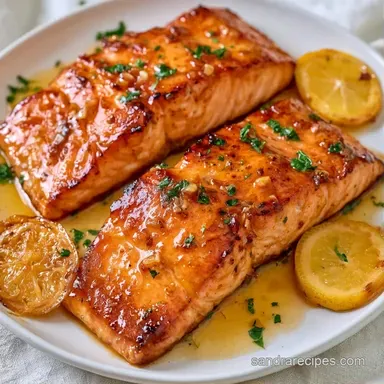
Honey Garlic Salmon
Ever wonder why restaurant salmon boasts a rich, deep amber glaze while home-cooked fillets often look pale or charred? The secret is usually the timing of the sugar. Adding honey too soon often results in burning before the salmon is fully cooked.
This method solves that problem by searing the fish first to create a firm, salty crust. After that, you create a thick glaze in that same skillet, letting the remaining fish oils infuse the garlic and lemon.
The result is a balanced meal, blending the brightness of lemon with the deep, salty kick of soy. It's a bold, flavorful dinner that's ready in less than an hour.
Recipe Specs
This meal is designed for efficiency and flavor. By letting the fish reach room temperature, you avoid the common problem of a burnt exterior and a raw, cold center.
The result is a fillet that flakes easily with a fork and wears a glossy, reduced sauce that clings to the meat rather than pooling at the bottom of the plate.
What Makes it Sticky
Searing First: Cooking the fish before adding honey prevents the sugars from burning, which keeps the glaze gold instead of black.
Acid Balance: Fresh lemon juice cuts through the heavy sweetness of the honey and the richness of the salmon fats.
Ingredient Deep Dive
- 4 (6 oz / 170g) salmon fillets
- 1/2 tsp (3g) salt
- 1/4 tsp (1g) black pepper
- 1 tbsp (15ml) olive oil
- 3 tbsp (63g) honey
- 2 tbsp (30ml) reduced-sodium soy sauce
- 1 tbsp (15ml) lemon juice
- 3 cloves (9g) garlic, minced
- 1 tbsp (14g) unsalted butter
| Ingredient | Role | If You Don't Have It |
|---|---|---|
| Honey | Provides sweetness and thickness | Maple syrup. Note: changes flavor profile to a woody sweetness |
| Soy Sauce | Adds salt and umami | Tamari or coconut aminos. Note: tamari is similar; coconut aminos are sweeter |
| Lemon Juice | Cuts richness with acidity | Lime juice. Note: adds a brighter, more tropical citrus note |
| Garlic | Adds pungent, aromatic depth | Garlic powder. Note: use 1/8 tsp per clove, but loses the fresh punch |
Gear for This Recipe
A large stainless steel or cast iron skillet is the best choice here. These materials handle medium-high heat well and allow the salmon skin to crisp up properly.
If you have very thick fillets, make sure your skillet is ovenproof. This allows you to finish the cook under the broiler or in the oven without moving the fish and risking a break.
How to Make It
Phase 1: The Prep
Remove salmon fillets from the refrigerator and let them rest at room temperature for 20 minutes to ensure even cooking. Use paper towels to pat the fillets completely dry on all sides. Moisture creates steam, which stops the fish from browning. Season both sides with 1/2 tsp (3g) salt and 1/4 tsp (1g) black pepper.

Phase 2: Achieving the Crust
Heat 1 tbsp (15ml) olive oil in a large skillet over medium-high heat until it shimmers. Place the salmon skin-side down, pressing gently with a spatula to ensure contact. Sear for 3–5 minutes without moving until a golden-brown crust forms. Flip the fillets carefully.

Phase 3: The Glaze Reduction
Reduce heat to medium. Push the salmon to one side of the pan, and add 1 tbsp (14g) unsalted butter. Once the butter is melted, stir in 3 cloves (9g) minced garlic for 30 seconds until it smells fragrant and toasted.
Pour in 3 tbsp (63g) honey, 2 tbsp (30ml) reduced-sodium soy sauce, and 1 tbsp (15ml) lemon juice. As the sauce bubbles and thickens, use a spoon to baste the glaze over the salmon for 2–3 minutes. This is a crispy honey garlic glazed salmon recipe, so keep that basting consistent.

Phase 4: Finishing the Cook
Continue cooking until the sauce is syrupy and the salmon is opaque. For very thick fillets, transfer the skillet to a 400°F (200°C) oven for 2–4 minutes to finish. Remove from heat when the internal temperature reaches 145°F (63°C), as per USDA guidelines for fish.
Chef: If you don't have a thermometer, press the top of the fillet gently. If it flakes easily along the white lines of fat, it is done.
Avoiding Kitchen Disasters
Glaze turning dark brown
Honey burns fast. If the sauce looks too dark or smells acrid, your heat is too high. Keep the pan at medium once the honey goes in. If it thickens too quickly, add a teaspoon of water to loosen it.
Salmon sticking to the pan
This happens if the pan isn't hot enough or the fish was moved too soon. Wait for the oil to shimmer before adding the fish. Once the crust forms, the salmon will naturally release from the surface.
Skin staying soft
Soft skin usually means the fillets were damp when they hit the oil. Be aggressive with the paper towels. Always start skin-side down and don't flip until the fish has seared for at least 3 minutes.
Flavor Twists
Depending on what you have in the fridge, you can tweak this honey garlic salmon recipe to change the vibe.
| Style | Substitution | Result |
|---|---|---|
| Spicy | Add 1 tsp Sriracha | Adds a heat kick to the sweetness |
| Maple | Swap honey for maple syrup | Deeper, autumn-like flavor |
| Ginger | Add 1 tsp grated ginger | Adds a fresh, peppery zing |
For a honey garlic salmon easy version, you can use pre-minced garlic from a jar, though fresh cloves provide a much more vibrant aroma.
Storage & Reheating
Store leftover salmon in a sealed container in the fridge. According to USDA FSIS, cooked leftovers are safe for 3 to 4 days. The glaze will thicken and become more like a jam in the cold.
To reheat, avoid the microwave. High microwave heat makes salmon rubbery and dry. Instead, place the fillets in a covered skillet over low heat. Add a small knob of butter or a splash of water to loosen the glaze and warm the fish gently through. Ensure reheated leftovers reach 165°F (74°C) for safety.
Serving Suggestions

This dish is rich, so pair it with something fresh and bright. A side of steamed broccoli or sautéed spinach balances the sweetness of the honey.
For a more filling meal, serve it over a bed of quinoa or wild rice. The grains soak up the extra syrupy sauce from the pan, making sure no flavor goes to waste.
Common Questions
Does the skillet have to be cast iron?
Any large skillet is suitable for this recipe.
Tip: non-stick pans are helpful for managing the sticky glaze.
Why did the skin turn soft instead of crisp?
Moisture on the skin or a pan that isn't hot enough prevents crisping.
Tip: press the fillets gently with a spatula during the first few minutes of searing.
How to reheat leftover salmon?
Place the fillets in a covered skillet over low heat.
Tip: add a small knob of butter to loosen the jam-like glaze.
Crispy Honey Garlic Salmon
Ingredients:
Instructions:
You May Also Like

Lemon Dill Salmon Sauce
This Lemon Dill Salmon Sauce adds a bright punch to any fillet.

Tandoori Salmon Recipe
This Tandoori Salmon Recipe uses a zesty Tandoori Salmon Marinade for juicy fish.

Clean Eating Salmon Recipe
This Clean Eating Salmon Recipe is one of our favorite healthy salmon dinner recipes.

Salmon with Garlic Cream Sauce
Salmon with Garlic Cream Sauce is savory. This creamy garlic butter salmon is a quick salmon dinner…

Crispy Garlic Butter Salmon
A crisp skin and tender center define this Garlic Butter Salmon.

Spicy Pan Fried Salmon
This Spicy Pan Fried Salmon features a bold Indian rub for a crisp finish.
