Oven Roasted Salmon with Lemon

- Total30 Mins
- Servings4 salmon fillets
- Calories414 kcal
- Time: 10 min active + 15 min cooking + 5 min resting
- Make it when: you want a nutritious, quick meal that feels upscale
- Pairs with: roasted asparagus or a lemon-butter quinoa
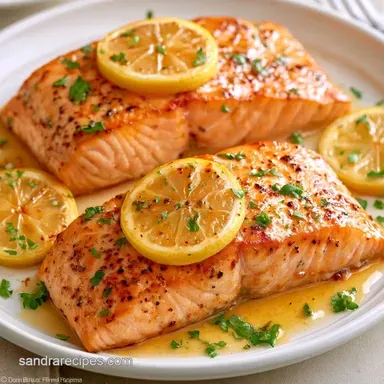
The scent of roasting lemon and the view of those tender, flaky pink layers are what make this recipe a success. You don't need a searing-hot skillet or a complicated process to get an impressive result.
This method for roasting salmon removes the stress from your cooking routine. You'll achieve a moist center and skin that remains whole, without the worry of the fish sticking or drying out.
It is a consistent way to have dinner ready in 30 minutes. You'll discover that tracking the internal temperature instead of relying solely on the timer makes a significant difference in the final consistency.
The Importance of Resting
Carryover Heat: Pulling the fish from the oven a few degrees early allows the temperature to climb slowly while it rests.
Dry Surface: Using a paper towel to remove surface moisture ensures the heat hits the fish immediately, so it roasts instead of steaming in its own juices.
Ingredients and Substitutions
- 1½ lb (680 g) salmon fillets with skin Why this? Skin protects the flesh from overcooking
- 1 tbsp (15 ml) avocado oil Why this? High smoke point prevents burning
- 1 tsp (6 g) kosher salt Why this? Coarser grains are easier to distribute
- 1/2 tsp (1 g) black pepper
- 1 lemon, sliced into rounds Why this? Adds bright acidity
- 1 tbsp (15 g) unsalted butter, melted Why this? Creates a rich, glossy finish
- 1 tbsp (3 g) fresh parsley, chopped
| Original Ingredient | Substitute | Why It Works |
|---|---|---|
| Avocado Oil (1 tbsp) | Grapeseed Oil (1 tbsp) | Similar high smoke point. Note: Neutral flavor |
| Unsalted Butter (1 tbsp) | Extra Virgin Olive Oil (1 tbsp) | dairy-free option. Note: Adds a fruitier, peppery note |
The Cooking Process
1. The Essential Prep
Set the oven to 400°F (200°C). Line a rimmed baking sheet with parchment paper. Dry the fish thoroughly using paper towels. Rub the 1 tbsp (15 ml) avocado oil evenly over the flesh, then season with 1 tsp (6 g) kosher salt and 1/2 tsp (1 g) black pepper.

2. The Precision Roast
Place the oven roasted salmon fillets skin-side down on the prepared baking sheet. Arrange lemon slices on top of each piece. Roast in the center rack for 12-15 minutes for 1-inch thick fillets, or 15-18 minutes for thicker steaks.

3. The Critical Finish
Remove the pan from the oven when the internal temperature hits 135°F to 140°F (57°C to 60°C). Transfer the fish to a plate and let it rest for 5 minutes until the final internal temperature reaches 145°F (63°C), as recommended by USDA fish safety guidelines. Baste the rested fillets with 1 tbsp (15 g) melted butter and garnish with 1 tbsp (3 g) chopped parsley before serving.
Avoiding Common Pitfalls

Don't be alarmed if you notice a white substance seeping from your fish. This is simply albumin, which escapes as high temperatures cause the muscle fibers to tighten rapidly. While it is perfectly edible, you can avoid it by removing the fish from the heat at the right temperature.
Another frequent issue is the skin clinging to the parchment. This usually happens if the fish wasn't dried enough or if the oven wasn't fully preheated. To ensure it releases cleanly, make sure the pan is hot and the skin is dry.
3 Signs It's Done
The flesh should change from a translucent raw pink to an opaque coral. When you press the top with a fork, the layers should flake apart easily along the white fat lines. The most accurate indicator is a thermometer reading of 145°F (63°C) after resting.
| Problem | Fix |
|---|---|
| White foam on surface | Reduce oven temperature by 25°F and remove the fish 5 degrees sooner |
| Dry, rubbery texture | Use a thermometer and remove the fish at 135°F |
| Skin sticking to pan | Use premium parchment paper and pat the skin completely dry |
Simple Flavor Changes
You can easily customize this oven-roasted salmon to fit what's in your pantry. A simple base of oil, salt, and pepper pairs well with almost any topping.
Maple Garlic Glaze
Combine 1 tbsp maple syrup with 1 minced garlic clove. For a sweet and savory crust, brush this onto the fillets during the final 5 minutes of roasting.
Mediterranean Pesto
Spread a thin layer of basil pesto over the fish before roasting. You can omit the butter baste at the end, as the pesto provides ample flavor and fat.
Dairy-free Alternative
Replace the melted butter with a drizzle of high-quality olive oil or a vegan butter alternative. This keeps the richness without using dairy.
Reheating Tips
To prevent the fish from becoming rubbery, avoid the microwave. Warm leftovers in the oven at 275°F (135°C) for 10-15 minutes, or use an air fryer (350°F/175°C) for 3-5 minutes. Per FoodSafety.gov, ensure the fish is heated to 165°F (74°C) for safe consumption.
Store any remaining portions in a covered container in the refrigerator for 3 days.
Common Questions
What is the safe internal temperature for salmon when cooked?
The safe final internal temperature is 145°F (63°C).
Tip: Remove the fish from the oven at 135°F to 140°F to prevent overcooking during the rest.
Is salmon better at 400 or 425?
400°F (200°C) is the recommended temperature to ensure the center stays tender.
Tip: Using avocado oil helps the fish withstand this heat without burning.
Does baking salmon for 20 minutes overcook it?
Yes, since even thick steaks only need 15 to 18 minutes.
Tip: Pull the fillets based on internal temperature for the most accurate result.
How do I keep the salmon from drying out when cooking it in the oven?
Apply avocado oil to the flesh and top each fillet with lemon slices.
Tip: Rest the fillets for 5 minutes before basting with melted butter.
oven roasted Salmon with Lemon
Ingredients:
Instructions:
You May Also Like

Lemon Dill Salmon Sauce
This Lemon Dill Salmon Sauce adds a bright punch to any fillet.

Tandoori Salmon Recipe
This Tandoori Salmon Recipe uses a zesty Tandoori Salmon Marinade for juicy fish.

Creamy Garlic Butter Salmon
Enjoy this Creamy Garlic Butter Salmon for a rich dinner. This Easy Creamy Garlic Butter Salmon…

Salmon Cream Sauce with Coconut Cream
Make this rich Salmon Cream Sauce for a healthy dinner. This Dairy Free Cream Sauce for Salmon…

Indian Spiced Baked Salmon
Indian Spiced Baked Salmon with a charred mahogany crust. This Indian style baked salmon includes a…

Spicy Pan Fried Salmon
This Spicy Pan Fried Salmon features a bold Indian rub for a crisp finish.
