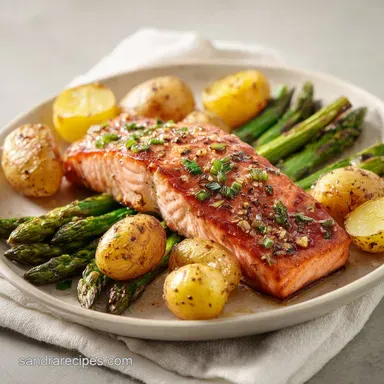
Easy One Pan Baked Salmon: with Potatoes and Asparagus
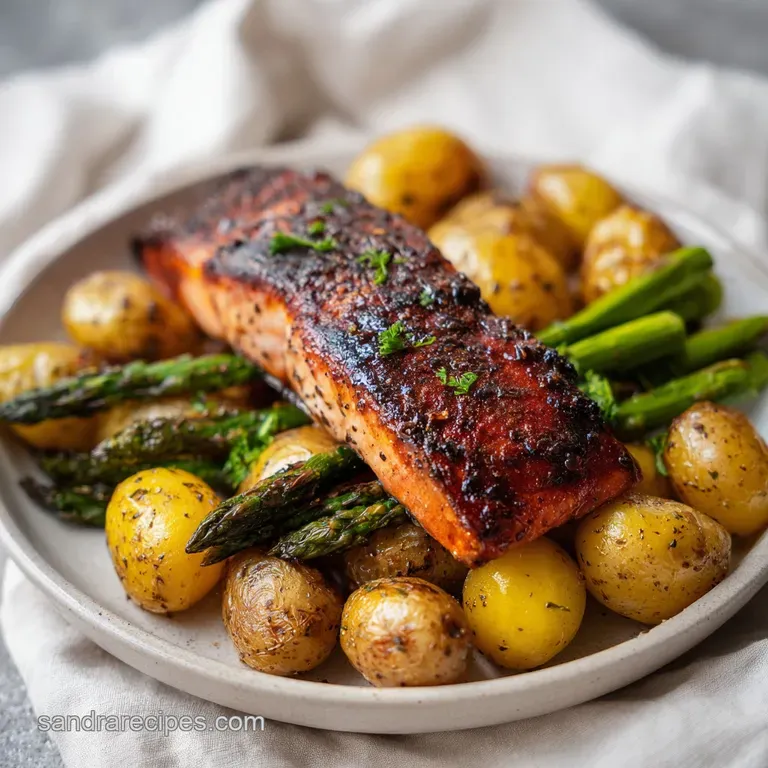
- Time:10 minutes active + 25 minutes cooking = Total 35 minutes
- Flavor/Texture Hook: Velvety lemon butter glaze with shatter crisp potato edges
- Perfect for: Busy weeknight dinners or healthy meal prep for the week
- How to Make Easy One Pan Baked Salmon
- Quick Specs and Prep Flow
- The Best Ingredients and Swaps
- Tools for a Stress Free Bake
- Steps From Prep to Plate
- Fixing Common Salmon Mishaps
- Troubleshooting Common Issues
- Fresh Flavor Twists to Try
- Storage and Zero Waste Tips
- Great Ways to Serve This
- High in Sodium
- Recipe FAQs
- 📝 Recipe Card
That sharp, citrusy scent of lemon hitting melted butter is honestly one of my favorite smells in the world. But for a long time, my attempts at "one pan" meals were a total disaster. I remember one Tuesday where I threw everything in at once, thinking I was being efficient.
I ended up with salmon that had the texture of a rubber eraser and baby potatoes that were basically raw pebbles in the middle. It was a tragedy.
The problem is that different foods need different amounts of time to get right. You can't treat a root vegetable the same way you treat a piece of fish. Once I realized that the secret is all about the timing, everything changed.
This easy one pan baked salmon is the result of that lesson, designed to give you that buttery, flaky finish without any of the guesswork.
You can expect a meal that feels a bit fancy but takes almost no effort. We're talking about salmon that flakes apart at the touch of a fork and asparagus that still has a bit of a snap to it.
It's the kind of reliable, hearty dinner that makes you feel like you have your life together, even if the rest of the house is a mess.
How to Make Easy One Pan Baked Salmon
The real trick to this recipe isn't a secret ingredient, it's the workflow. I call it "staggered roasting." Since baby potatoes take way longer to soften than salmon takes to cook, we give them a head start. This prevents the common issue of overcooking the fish just to make sure the potatoes aren't hard.
When you're putting together this easy one pan baked salmon, the goal is to create a cohesive flavor profile across the whole tray. The lemon butter garlic glaze acts as the glue, tying the earthy potatoes and the fresh asparagus to the rich salmon.
By the time it comes out of the oven, the juices from the fish mingle with the butter and lemon, creating a natural sauce that coats everything.
I've found that using parchment paper is a non negotiable here. Not only does it make cleanup a breeze, but it also stops the salmon skin from sticking to the pan. If the skin rips, you lose that satisfying texture. Trust me on this, just spend the extra ten seconds lining your pan.
Quick Specs and Prep Flow
To make this a stress free experience, I like to break the process into a clear timeline. When you have a plan, you aren't rushing to chop garlic while the potatoes are already burning. It's all about the flow.
- 1. The Head Start (0-15 mins)
- Focus entirely on the potatoes. Get them seasoned, spread out, and in the oven. This is when you can tidy the counter or pour a glass of water.
- 2. The Assembly (15-20 mins)
- While the potatoes are roasting, whisk your glaze and trim the asparagus. This is the "active" part of the prep.
- 3. The Final Blast (20-35 mins)
- Add the fish and greens, pour over the glaze, and let the oven do the heavy lifting.
Precision Checkpoints:
- Oven Temp: 200°C (400°F)
- any lower and the potatoes won't brown; any higher and the garlic in the butter might burn.
- Potato First Pass: 12-15 minutes until they are slightly softened.
- Salmon Target: 63°C (145°F) internal temperature for that perfect, flaky finish.
| Method | Time | Texture | Best For |
|---|---|---|---|
| Fresh Salmon | 12-14 mins | Velvety & Flaky | Fresh dinners |
| Frozen Salmon | 15-18 mins | Slightly denser | Quick meal prep |
The Best Ingredients and Swaps
For this recipe, quality matters, but you don't need to spend a fortune. I always suggest skin on fillets because the skin protects the meat from the direct heat of the pan, keeping it moist. For the potatoes, baby reds or gold are best because they hold their shape and have a naturally creamy interior.
The Lineup:
- 1.5 lbs salmon fillets, skin onWhy this? Skin prevents overcooking and adds texture
- 1 lb baby potatoes, halved or quarteredWhy this? Small size ensures they cook through quickly
- 1 bunch asparagus (approx 1 lb), woody ends trimmedWhy this? Fast cooking time matches the salmon
- 3 tbsp olive oilWhy this? High smoke point for roasting
- 1 tsp saltWhy this? Enhances all natural flavors
- 1/2 tsp black pepperWhy this? Adds a subtle bite
- 4 tbsp unsalted butter, meltedWhy this? Creates the velvety sauce
- 3 cloves garlic, mincedWhy this? Pungent, savory base
- 2 tbsp lemon juiceWhy this? Cuts through the richness of the fish
- 1 tbsp fresh dill, choppedWhy this? Classic pairing for salmon
- 1 whole lemon, thinly slicedWhy this? Adds visual appeal and extra zest
Substitution Options:
| Original Ingredient | Substitute | Why It Works |
|---|---|---|
| Salmon Fillets | Steelhead Trout | Similar fat content and flavor. Note: Slightly milder taste |
| Asparagus | Broccolini | Similar roasting time. Note: Adds a heartier, crunchier texture |
| Fresh Dill | Dried Parsley | Provides a fresh, herbal note. Note: Use 1/3 the amount of dried |
| Unsalted Butter | Ghee | Higher smoke point. Note: Lacks the slight sweetness of butter |
Right then, before we move to the equipment, just a quick tip. If you're using frozen salmon, make sure it's fully thawed in the fridge overnight. If you put a frozen block of fish on those hot potatoes, the temperature of the whole pan will drop, and you'll end up with soggy vegetables.
Tools for a Stress Free Bake
You don't need a fancy kitchen to make this happen. In fact, the beauty of the easy one pan baked salmon is that it strips away the need for a dozen different pots and pans.
The Essentials:
- Large Rimmed Sheet Pan: You need enough space so the vegetables aren't crowded. If they're too close, they'll steam instead of roast, and you won't get those crispy edges.
- Parchment Paper: As mentioned, this is your best friend for cleanup and preventing the salmon from sticking.
- Small Mixing Bowl: For whisking the lemon butter glaze.
- Instant Read Thermometer: This is the only way to be 100% sure your salmon is done without overcooking it.
Decision Shortcut:
- If you want more crispiness, use a dark colored metal pan.
- If you want easier cleanup, use a silicone baking mat or parchment.
- If you have small fillets, increase the final bake time by 2-3 minutes.
Steps From Prep to Plate
Let's crack on with the actual cooking. Remember, we're following a flow here, so don't rush the potato stage.
Phase 1: The Potato Head Start 1. Preheat your oven to 200°C (400°F). Note: Let it fully reach temp so the potatoes sear immediately 2. Toss the halved baby potatoes with 1 tbsp of olive oil, salt, and pepper. 3.
Spread them on a parchment lined sheet pan and roast for 12-15 minutes until slightly softened and golden.
Phase 2: Adding the Salmon and Greens 4. Push the roasted potatoes to the edges of the pan. 5. Place the salmon fillets in the center, skin side down, and arrange the asparagus around the fish. 6. Drizzle the remaining olive oil over the asparagus and season with a pinch of salt.
Note: Keep the oil light so the butter glaze has room to stick
Phase 3: The Glazing and Finish 7. Whisk together the melted butter, minced garlic, lemon juice, and chopped dill. 8. Spoon the mixture generously over each fillet and the surrounding vegetables. 9. Top each fillet with a lemon slice. 10.
Bake for another 12-14 minutes until the salmon flakes easily with a fork and reaches an internal temperature of 63°C (145°F).
Chef's Note: For a more intense flavor, you can grate a bit of fresh lemon zest directly into the butter glaze. It adds a high note brightness that the juice alone can't provide.
Fixing Common Salmon Mishaps
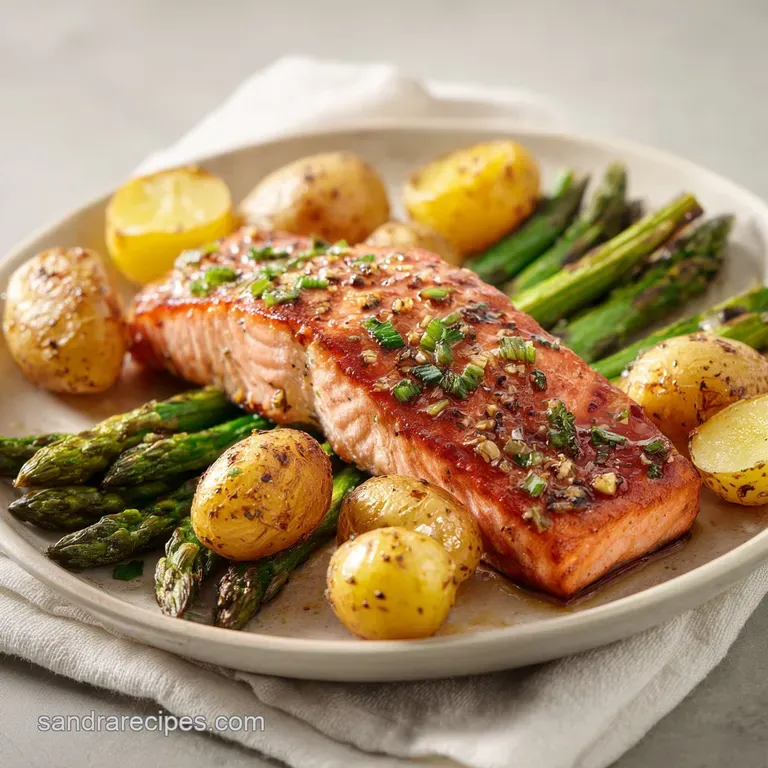
Even with a plan, things can go sideways. Most salmon issues come down to temperature or timing. If you've ever had fish that felt like a sponge, it's usually because of one of the things listed below.
Troubleshooting Common Issues
| Issue | Solution |
|---|---|
| Why Your Salmon is Too Dry | This is the most common fail. It happens when the fish stays in the oven just a few minutes too long. Because salmon is lean, it goes from "perfect" to "chalky" very quickly. Use your thermometer and |
| Why the Vegetables are Soggy | Sogginess is almost always caused by overcrowding the pan. When the asparagus and potatoes are piled on top of each other, they release steam that stays trapped. Give every piece of food its own "pers |
| Why the Potatoes are Still Hard | If your potatoes are still firm, they either weren't cut small enough or they didn't get enough of a head start. Make sure they are halved or quartered to about 2cm chunks. |
Common Mistakes Checklist:
- ✓ Did you preheat the oven fully?
- ✓ Are the potatoes cut into uniform sizes?
- ✓ Did you leave space between the asparagus spears?
- ✓ Is the salmon skin side down?
- ✓ Did you use parchment paper to prevent sticking?
Fresh Flavor Twists to Try
Once you've nailed the easy one pan baked salmon, you can start playing with the flavor profiles. The lemon butter base is a classic, but it's also a great canvas for other tastes.
For a Honey Soy Twist: Swap the butter and lemon for a mix of soy sauce, honey, and a splash of toasted sesame oil. This version is a bit more savory and sweet, and it works incredibly well if you swap the asparagus for snap peas.
For a Mediterranean Profile: Instead of dill, use fresh oregano and add a handful of halved cherry tomatoes to the pan during the final 12 minutes. The tomatoes will burst and create a jammy sauce that tastes like a summer vacation.
For a Pesto Crusted Version: Spoon a dollop of basil pesto over the salmon fillets instead of the butter glaze. To keep things interesting, you can add a sprinkle of Panko breadcrumbs on top of the pesto for a shatter crisp crust.
If you're looking for a sweet contrast after a healthy meal like this, you might find yourself craving something rich. While this is a light dinner, I often treat myself to fudgy brownies for dessert. It's the perfect balance to a lean protein dinner.
Storage and Zero Waste Tips
Leftovers are great, but salmon can be tricky to reheat without drying it out.
Storage Guidelines: Store the salmon and vegetables in an airtight container in the fridge for up to 3 days. I don't recommend freezing this specific dish because the asparagus loses its texture and becomes mushy upon thawing.
Reheating the Right Way: Avoid the microwave if you can. Instead, put the leftovers in a small oven safe dish with a teaspoon of water or a pat of butter. Cover it with foil and warm it in the oven at 150°C for about 10 minutes.
This gently brings the temperature up without "zapping" the moisture out of the fish.
Zero Waste Hacks:
- Lemon Rinds: After slicing your lemons, don't toss the peels. Zest them and freeze them in a small jar for future baking or pasta dishes.
- Asparagus Ends: The woody bottom ends of the asparagus are too tough to eat, but they are gold for stocks. Throw them in a freezer bag with other veggie scraps (onion skins, carrot ends) to make a homemade vegetable broth.
- Potato Skins: If you prefer peeled potatoes, save the skins, toss them in oil and salt, and roast them separately for a crunchy snack.
Great Ways to Serve This
While this is a complete meal on its own, a few additions can make it feel like a restaurant dish. I love serving this with a side of quinoa or a simple arugula salad with a light vinaigrette to add some freshness.
If you have a few extra minutes, try making a quick garlic aioli to dip the potatoes in. Just mix some mayo, lemon juice, and a crushed garlic clove. It adds a creamy element that complements the roasted flavors perfectly.
For those who love the combination of fish and butter, you might also enjoy experimenting with other buttery textures in your kitchen. If you're in the mood for something completely different and sweet, my velvety homemade marshmallows are a fun project for a slow Sunday.
Final Thought on Timing: The beauty of the easy one pan baked salmon is that it removes the stress of the kitchen. By focusing on the prep flow and the staggered roast, you turn a potentially chaotic meal into a reliable routine. It's hearty, it's stress free, and most importantly, it actually works.
Trust the thermometer, give your potatoes their head start, and enjoy the sizzle.
High in Sodium
810 mg 810 mg of sodium per serving (35% 35% of daily value)
The American Heart Association recommends a daily sodium limit of no more than 2,300 mg for most adults to maintain heart health.
Tips to Reduce Sodium
-
Slash the Added Salt-30%
The primary source of sodium here is the 1 tsp of salt; reduce this to 1/4 tsp or omit it entirely to drastically lower sodium.
-
Boost Citrus Acidity-10%
Increase the lemon juice and add extra lemon slices to enhance the brightness of the dish, which mimics the taste of salt.
-
Amplify Aromatics-5%
Double the amount of minced garlic to create a more robust savory flavor profile that reduces the craving for salt.
-
Use Fresh Herbs
Increase the amount of fresh dill or add chopped parsley to add aromatic complexity without adding any sodium.
Recipe FAQs
Why roast the potatoes before adding the salmon?
Potatoes require a longer cooking time than fish. Roasting them for 12–15 minutes first ensures they are golden and tender by the time the salmon reaches the proper internal temperature.
How to check if the salmon is perfectly cooked?
Use a meat thermometer to reach 145°F (63°C). You can also verify doneness by checking if the fish flakes easily with a fork.
Is it true that I can put all the ingredients in the oven at the same time?
No, this is a common misconception. If added simultaneously, the salmon will overcook and become chalky before the potatoes are softened.
Can I freeze the leftover salmon and asparagus?
No, avoid freezing this dish. While the fish may be fine, the asparagus loses its structural integrity and becomes mushy upon thawing.
Why are my baked vegetables coming out soggy?
You are likely overcrowding the pan. When vegetables are piled together, they release steam that stays trapped instead of evaporating, preventing them from roasting.
How to reheat the leftovers without drying them out?
Warm in the oven at 150°C for 10 minutes. Place the food in a small dish with a pat of butter and cover with foil to lock in moisture.
What dessert pairs well with this light meal?
A citrusy dessert balances the rich salmon perfectly. If you loved the fresh lemon in this dish, you'll enjoy the tart balance of a creamy lemon posset.
Easy One Pan Baked Salmon for 4 Servings